
A spare part that must reach a production line tomorrow and a container of goods that can travel for a few weeks need different routes. Choosing the mode of transport is the first decision of every shipment, and it sets most of the cost and the transit time. This guide compares sea, road, air and express from and to Tunisia, with simple rules of thumb.
Four questions that decide the mode
- How urgent is it? Count the days until the goods are needed, not until they leave.
- How big, heavy and valuable is the shipment?
- Where does it go: across the Mediterranean, to the neighbouring countries or overseas?
- What does waiting cost you: a stopped production line, lost sales or only some extra stock?
Sea freight: the cheapest way to move volume
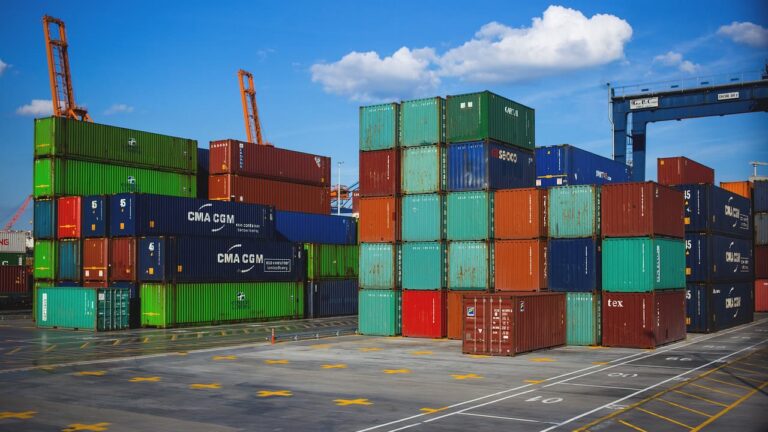
Most of the world's trade goes by sea, and so do most shipments to and from Tunisia, through the ports of Radès and Sfax. You can book a full container (FCL) or share one with other shippers (LCL). Sea freight costs far less per kilo than air, but it takes longer: from a few days across the Mediterranean to several weeks from Asia. See our sea freight service, our guide to container types and routes such as Italy to Tunisia or China to Tunisia.
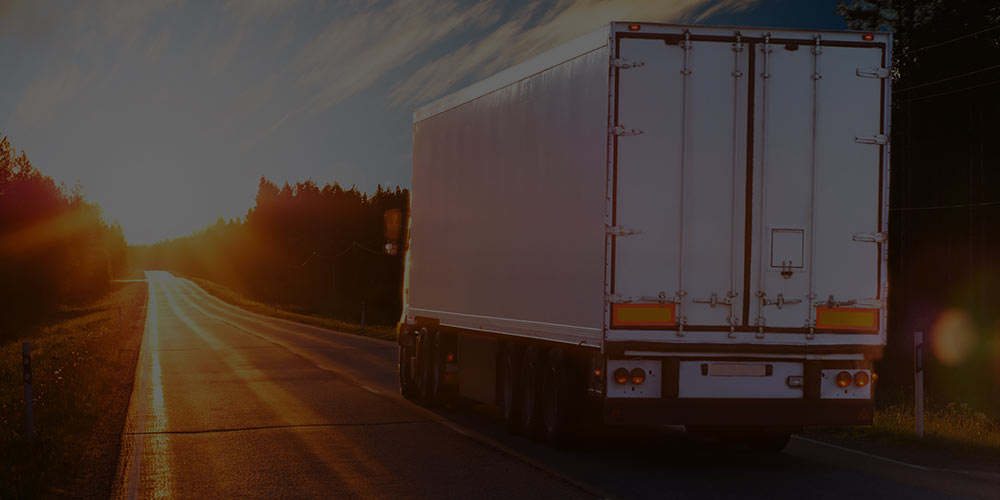
Road freight: door to door, without reloading
A truck takes goods from the sender's door to the receiver's door. Between Tunisia and Europe, trailers cross the Mediterranean on ferries to Italy or France and continue by road; to Algeria and Libya they drive straight over the border. Road suits full loads and pallets to Europe and North Africa, and with groupage even a single pallet travels at a fair price. See our road freight service, groupage between Tunisia and France and Tunisia to Algeria.
Air freight: when time is critical
Air freight takes days instead of weeks and reaches more than 220 countries. It suits urgent goods, high-value goods and perishables. Airlines charge the greater of the real weight and the volume weight, with 1 m³ counted as 167 kg, so light and bulky goods are expensive by air. See our air freight service.
Express: when it cannot wait
For documents, samples and small urgent parcels, express services pick up and deliver door to door, often by the next flight out to Europe and to major cities worldwide. Per kilo it is the most expensive option, so it pays only for small, urgent shipments.
Rules of thumb
- A small parcel needed in a day or two: express.
- Urgent goods of a few dozen to a few hundred kilos, or valuable goods: air.
- A few pallets to Europe or North Africa: road groupage.
- More than about 13 to 15 m³: a full container or a full truck is usually cheaper than groupage.
- Long distance and not urgent: sea.
- Modes can be combined, for example a container to Radès and then a truck to Algeria, or an urgent first part by air and the rest by sea.
The mode also changes the carbon footprint: per tonne and kilometre, a ship emits far less than a truck, and a plane far more. Our freight tools estimate the CO₂ and the chargeable weight of a shipment by each mode.
How we help
We work with sea, road and air carriers every day, so we can compare the options for your shipment and combine modes where that saves time or money. Tell us what you ship, where to and by when: we come back with the route we recommend and its full cost, explained line by line as in our guide to how a freight quote is built.
Planning a shipment? Request a quote with every fee included upfront, or talk to our team in Tunisia: +216 70 295 255, info@kyranislogistics.com.


Comments
Ask a question or share your experience.
No comments yet. Be the first to ask a question.