
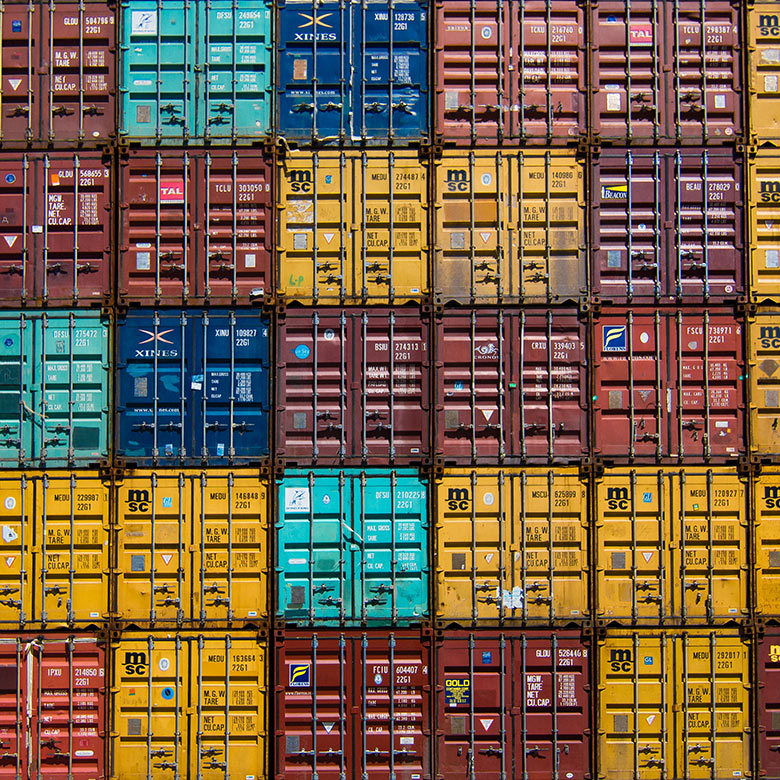
Many businesses ship small quantities often: a pallet for one customer, a few cartons of spare parts, a replenishment for a shop. Sending each one on its own means paying for space you do not use and going through customs again and again. Freight consolidation, also called groupage, puts small shipments together so they travel, and are cleared, as one.
Two kinds of consolidation
- Your own orders combined: several consignments from you, or from several of your suppliers, to the same country travel together, with one set of documents and one customs clearance.
- Shared space: your goods share a container or a truck with other shippers' goods. By sea this is called LCL (less than container load); by road, part load or groupage. You pay only for the space your goods take.
How it works, step by step
- You book a departure and get a cut-off date: the last day the goods can reach the consolidation warehouse.
- Your goods are delivered or collected, checked, measured and weighed.
- They are loaded with the other shipments into one container or truck and sealed.
- The container or truck travels on a fixed schedule.
- At destination it is unloaded at a warehouse, the shipments are separated and each one is cleared through customs.
- Your goods are delivered to the receiver or collected at the warehouse.
What you gain
- Lower cost for small volumes: you pay per cubic metre or per tonne instead of for a whole container or truck.
- Fewer formalities: combining your own orders means one declaration and one set of fees instead of several.
- Regular departures, so you can ship smaller quantities more often and hold less stock.
- One team following one shipment instead of many separate ones.
What to keep in mind
- Transit takes a few days longer than a full container or truck, because of loading and unloading at both warehouses.
- Your goods are handled more often, so good packing and labels on every package matter even more: see our packing and palletising guide.
- Sea groupage is charged on weight or volume, whichever is greater, with 1 m³ counted as 1 tonne. Light, bulky goods pay for their volume.
- Some goods cannot share space, for example certain dangerous goods or goods needing a constant temperature.
- At destination, the container is opened only when it has arrived and been released, so one late document can slow the delivery: send yours early.
When it pays
As a rule of thumb, sea groupage is usually cheaper up to about 13 to 15 m³; above that a 20-foot container often costs less, and it travels sealed from door to door. Our volume and chargeable weight calculator tells you where your shipment stands, and our guide to container types shows what fits in a full container. Between Tunisia and France, our road groupage service takes pallets and part loads both ways.
How we help
Tell us what you ship, how often and where to. We will compare groupage with a full container or truck, plan the cut-off dates around your production and take care of customs clearance at both ends. Every fee is in the quote before you book: see how a freight quote is built.
Planning a shipment? Request a quote with every fee included upfront, or talk to our team in Tunisia: +216 70 295 255, info@kyranislogistics.com.

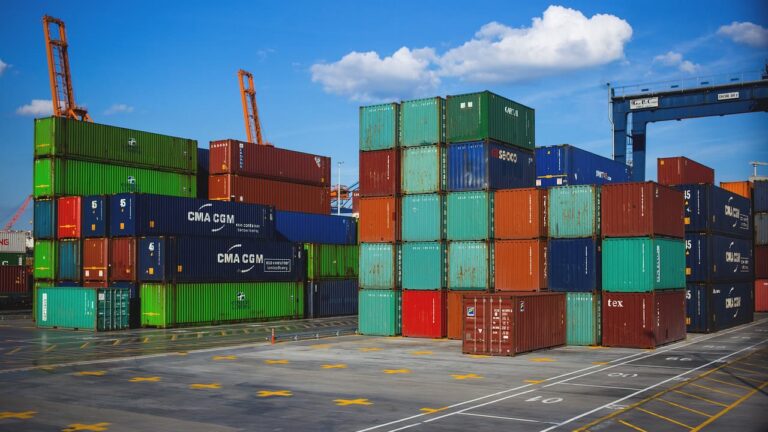

Comments
Ask a question or share your experience.
No comments yet. Be the first to ask a question.